Avia NG Airport Consultants land at R+T Park
The Captain has turned off the “Fasten Seat Belt” sign, indicating it’s time to stand up and welcome Avia NG…
This story was originally published on the University of Waterloo’s Faculty of Environment News
By: Christina Pope
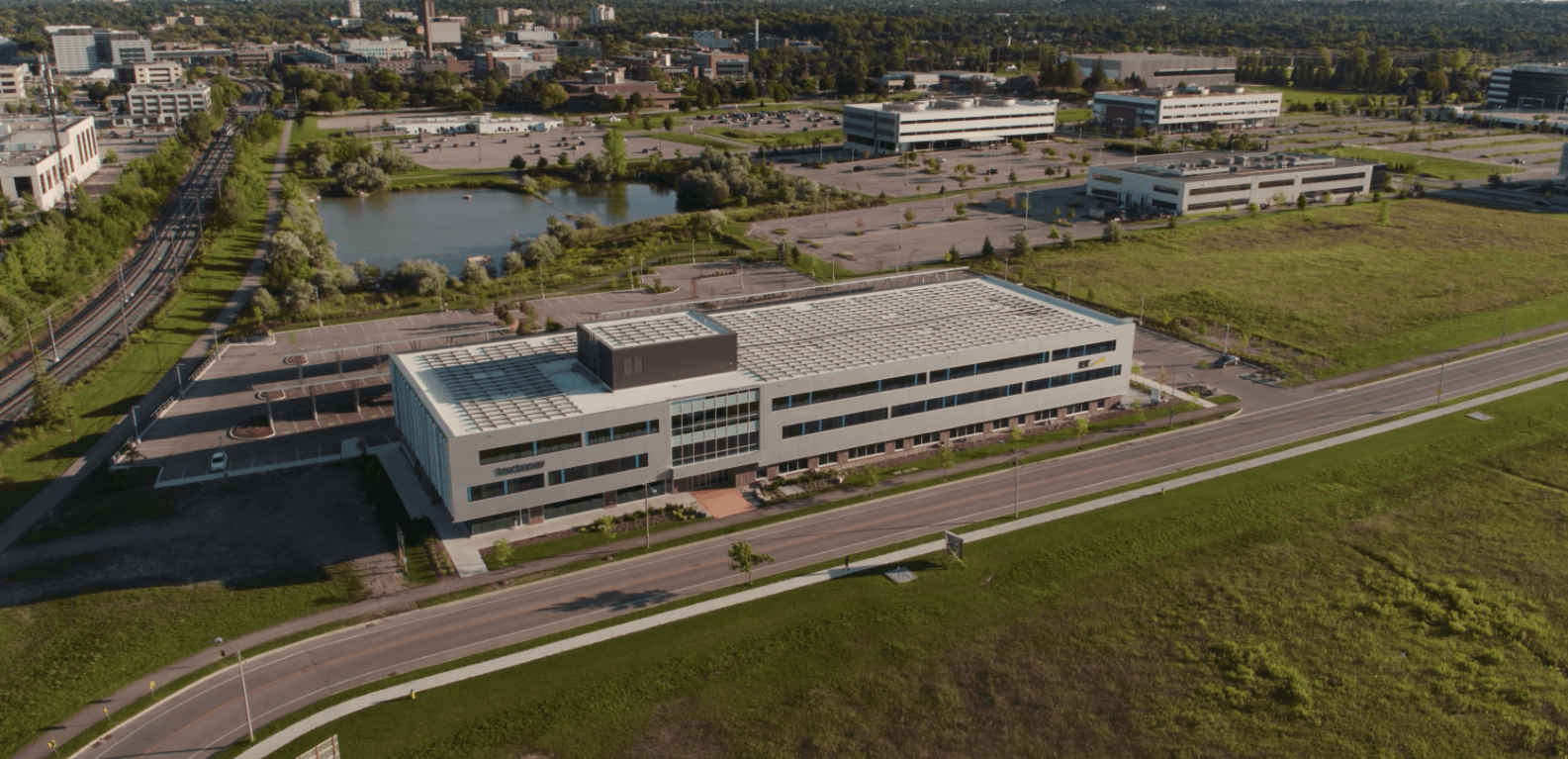
Located on the University of Waterloo’s north campus, the David Johnston Research + Technology Park is one of Canada’s largest, most successful innovation districts. For over two decades, R+T Park has been at the forefront of technological advancement, serving as a hub where groundbreaking research transforms into real-world solutions.
To anticipate the future needs of R+T Park, a Strategic Planning initiative is being implemented. This work is headed by Mike Pereira, the Director of Real Estate and R+T Park, and alumni of the Master of Economic Development and Innovation program. When Pereira approached Associate Professor Heather Hall to become involved in creating R+T Park’s future vision, she identified an opportunity to engage her current students with an applied, timely project that could serve as the foundation for her policy and practice class.
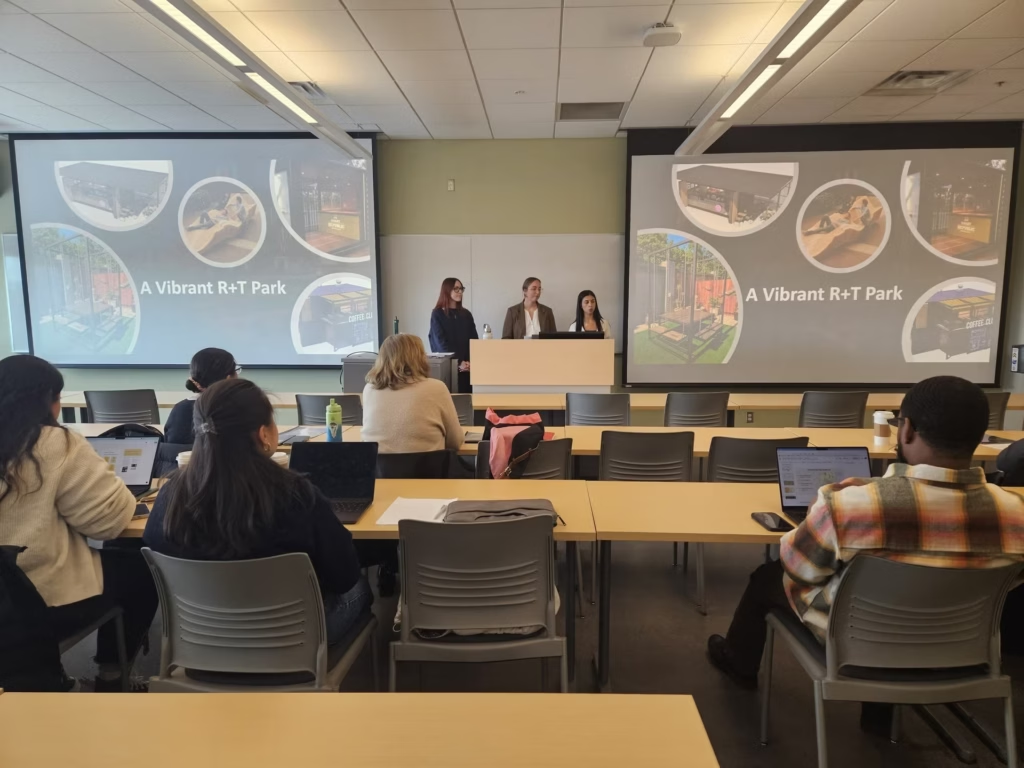
ECDEV 602: Economic Development: Policy and Practice exposes students to the spectrum of contemporary economic development policies and practices enacted at the local, regional and national scales by a range of public, private and not-for-profit agencies. Most of the course centers around an applied project, where students tackle a problem and produce a final product that is reflective of the work required of economic development professionals.
Hall challenged her students to work in teams to create their own unique vision for the future of R+T Park. To prepare for the assignment, the groups received a tour of R+T Park and an overview of its current state by Pereira. They identified the Parks’ strengths, weaknesses, opportunities and threats, and looked at case studies from other innovation spaces from around the world. Most students took advantage of the location of R+T Park by visiting the area several times and attending tenant events.
“I had heard about the R+T Park before but never engaged with it up close”, says MEDI student Lana Dadson. “This project gave me a deeper understanding of Waterloo Region’s innovation ecosystem and the role the park plays in connecting research and industry. It was exciting to work on a real site and imagine how we could make it even better.”
The student groups then worked to develop a vision strategy based on their visits, consultations and lectures. “Creating your own vision strategy feels incredible; you get to be an artist, an innovator, and a leader all at once. It is the opportunity to paint a picture of the future, take people on a journey towards it, and inspire them through the art of the possible to achieve it,” says MEDI student Mason Ainswoth.
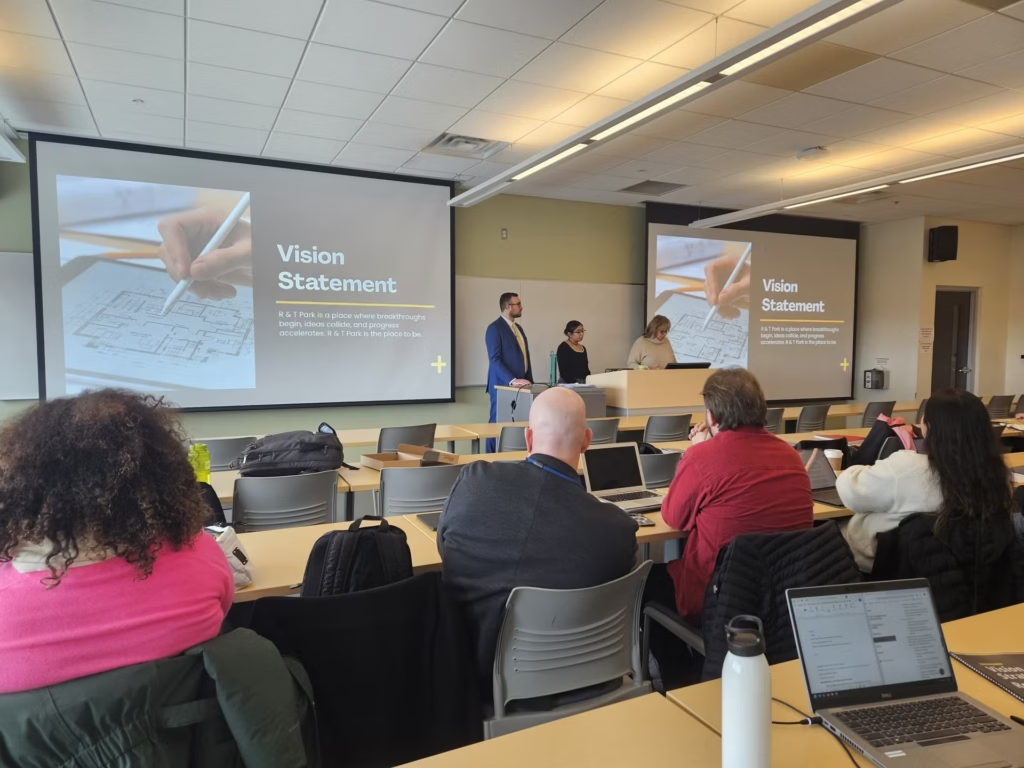
On the last day of class, the student teams pitched their vision strategy to judges Pereira, Jenn Dawe (Manager, R+T Park), and Paul Kalbfleisch (Consultant and co-author of The JOY Experiments).
“Having Pereira, Dawe and Kalbfleisch join as guest judges was an amazing opportunity for the students”, says Hall. “It provided them an opportunity to pitch to a ‘client’ – a skill that is essential in the economic development profession. It was also a fantastic opportunity for the judges, who are all members of the formal R+T Strategic Planning initiative, to hear the student’s innovative ideas that will inspire and reshape the future of R+T Park.”
The MEDI students have finished ECDEV 602 with experience working with a client, pitching a proposal, and receiving feedback from industry professionals. Their project has a real-world impact on the future of their campus and Waterloo Region. These are the types of skills and experiences that are in demand and help our MEDI students join the workforce with expertise and confidence.