
Join the BioBlitz 2026: Discover the Biodiversity Around Us
Calling all nature lovers! David Johnston Research + Technology Park is teaming up with the Sustainability Office at the University…
We’ve relied on data encryption protocols like RSA and ECC, the gold standards used by governments, military, and financial institutions worldwide to protect sensitive systems. But ask any cybersecurity professional about that standard, and they’ll all tell you the same thing — that encryption will soon be broken by a quantum computer.
It’s not a question of if, it’s a question of when.
The encryption systems protecting banking records, medical data, and government communications have been largely unchanged for decades. But with quantum computers advancing faster than many people are willing to realize, those systems face an imminent reckoning — and the clock may already be running out. Bad actors are harvesting encrypted data today, banking on future quantum computers to unlock it.
Waterloo-based Qorsa is tackling the threat with an end-to-end quantum proof intelligence system. Its Atlas AI platform and CasQade cybersecurity tools are designed to protect against both classical and quantum-based threats everywhere from data centres to the battlefield.
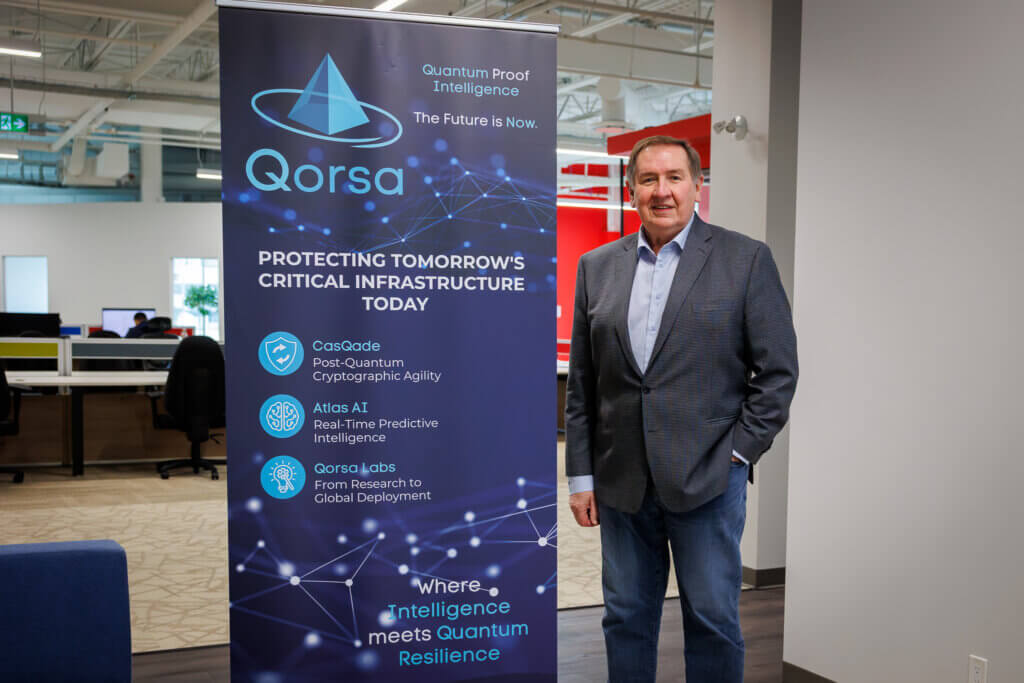
Qorsa was founded in 2025, but it traces its roots back to 2019 through two different ventures — Civic Atlas and Quantum Secure Solutions. Both organizations were led by Qorsa’s CEO, Terry Popowich, who had previously co-founded the team at Terranet Inc. in Toronto. It was a call from Don Cowan, Distinguished Professor Emeritus and founding Chair of the Computer Science Department that inspired Popowich to make the move to Waterloo.
“He thought that my experience combined with his research skill sets could come together to create something important, which ended up being Civic Atlas,” Popowich said.
Civic Atlas used knowledge graphs to build a suite of AI-powered tools called knowledge builders to tackle large data sets, specifically for risk analysis. Recognizing that AI systems would eventually be vulnerable to quantum computing, the team behind Civic Atlas launched Quantum Secure Solutions to develop products to secure systems for governments, infrastructure, and both defense and civilian organizations against the quantum threat. The two companies were merged in 2025 to form Qorsa.
“We knew that AI was going to be as vulnerable as any other software or legacy system because of the emergence of quantum computers,” he said. “We’ve developed a very sophisticated set of products that secures systems for governments, defense, infrastructure, and large and small companies.”
Quantum security professionals refer to the day quantum computers break today’s encryption as ‘Q Day’. Whether it happens next year, in five years or a decade from now, the challenge is not just encryption, but classical and quantum algorithms. Popowich said Qorsa has built its platform around a concept called crypto agility that allows it to track large amounts of data and capture the threats coming at a system from new developments in algorithms.
“We can change out an algorithm in seconds where normally it takes years or months,” Popowich added.
The Qorsa system has been validated in real time severe operational conditions by NATO during a mission in Turkey in 2025.
“We managed those transitions and kept all the systems up across a very large live network — under significant duress without any downtime,” he said. “Now it’s become the core infrastructure for NATO’s communication systems because we can mitigate threats so quickly.”
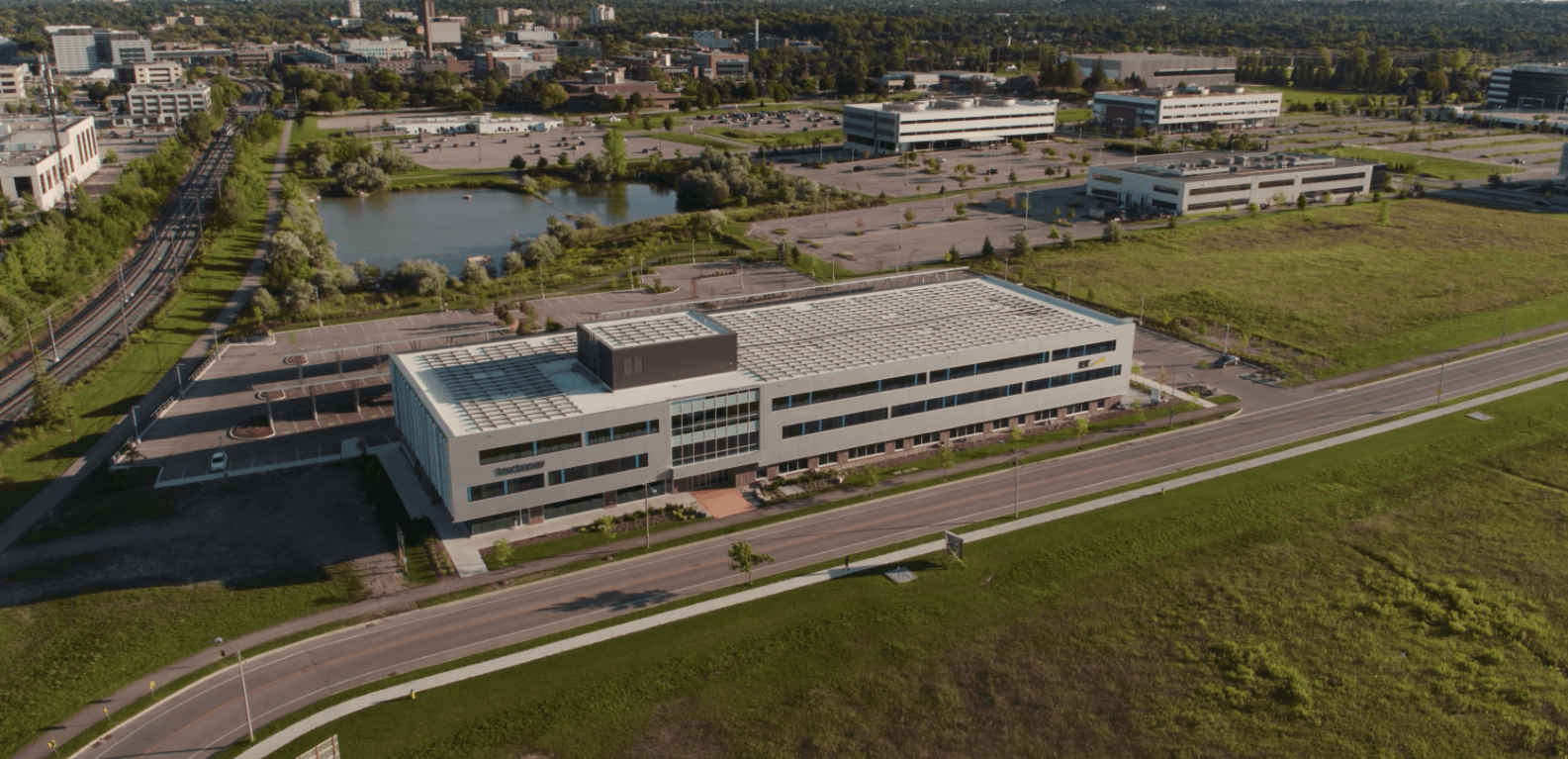
Qorsa is proudly based in Waterloo inside the David Johnston Research + Technology Park. The team recently made the move into a 16,500 square feet space at 445 Wes Graham Way.
“It’s been a wonderful ride. We’re very proud to be a Canadian company and be in Waterloo.”
CEO, Terry Popowich
“It’s been a wonderful ride. We’re very proud to be a Canadian company and be in Waterloo. When I moved here, it was because Don and I really wanted this to stay a Waterloo company and be part of this Quantum Valley that’s emerging here,” he said.
Today, Qorsa operates its main business alongside Qorsa Labs, its research and development division. Qorsa Labs’ team does applied research work to develop ideas for new tools and features that are picked up by Qorsa’s engineering team to develop into market-ready products.
“Everything starts with research,” Popowich said. “When we started, we stayed under the radar. We didn’t even have a website for six years. We wanted to make sure that we could validate this technology in the real world before we tried to promote it as a solution.”
While Qorsa’s client base is global, Popowich said the scale-up wants to work with Canadian companies to help secure our sovereignty.
“If you can’t protect your digital sovereignty, you can’t protect your sovereignty. It’s the heart of what we’re building,” he said.